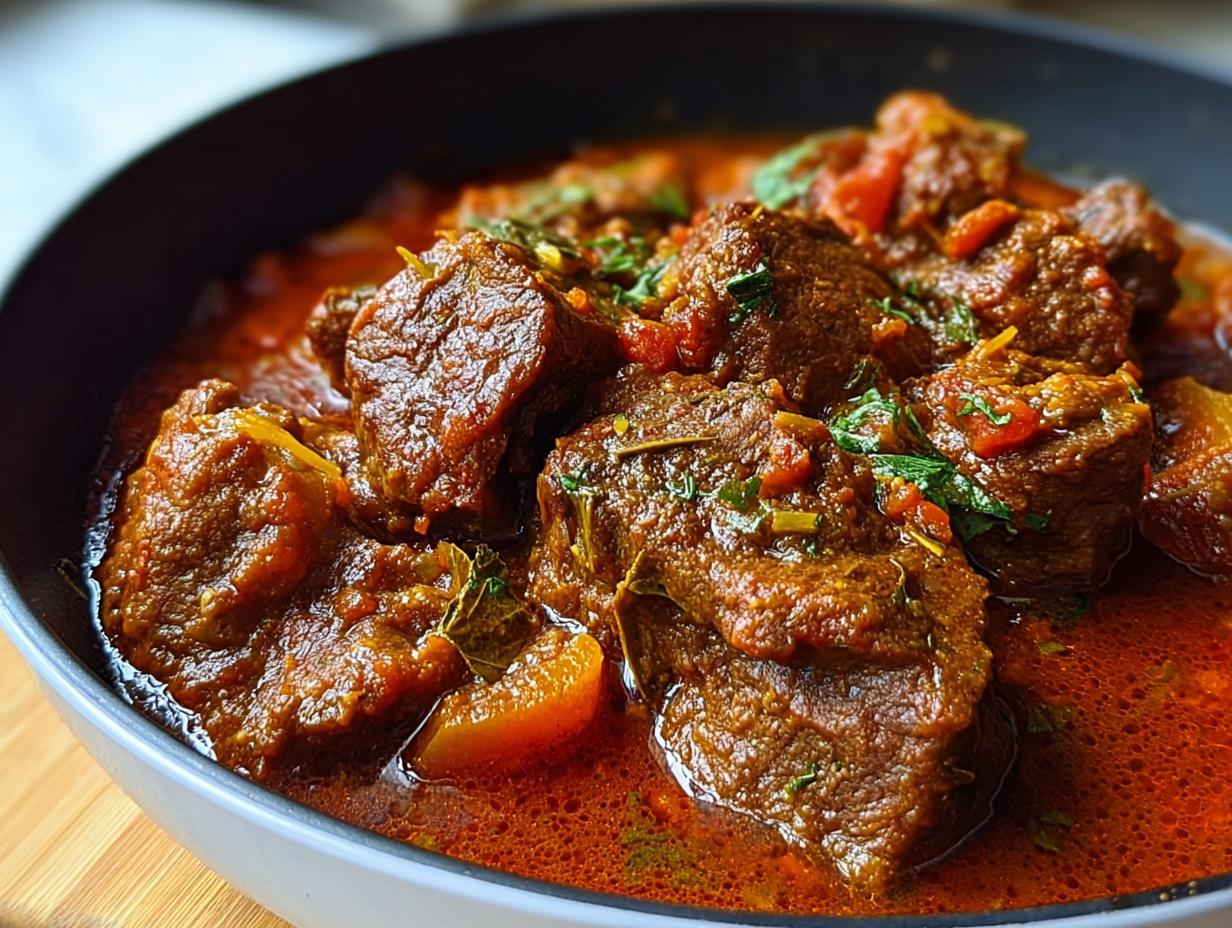
Nigerian Beef Stew Rich has always been my go-to comfort food, a dish that instantly transports me back to my childhood kitchen. I remember the incredible aroma filling our home on Sundays, a savory blend of spices and slow-cooked beef that promised a delicious meal. This isn’t just any stew; it’s an authentic Nigerian beef stew, packed with layers of flavor that are both warming and incredibly satisfying. The tender beef, simmered to perfection in a vibrant, spicy sauce, is something truly special. Get ready to fall in love with this hearty classic – let’s get cooking!
Why You’ll Love This Nigerian Beef Stew Rich
This Nigerian beef stew is more than just a meal; it’s an experience! Here’s why you’ll be making it again and again:
- Incredible Depth of Flavor: Every bite is a symphony of spices, peppers, and tender beef, making it a truly flavorful Nigerian beef stew.
- Perfectly Tender Beef: My method ensures the beef is fall-apart tender, melting in your mouth with every spoonful.
- Comfort Food at Its Finest: It’s the ultimate cozy dish, perfect for family dinners or a comforting solo meal.
- Adaptable Spice Level: You control the heat! You can make it mildly spiced or wonderfully fiery.
- Surprisingly Simple: Despite its complex flavor, this is an easy Nigerian beef stew to prepare, perfect for weeknights.
- Versatile Serving Options: Delicious served over fluffy rice, alongside fried plantains, or even with pounded yam.
- Makes Amazing Leftovers: The flavors meld and deepen overnight, so it tastes even better the next day!
Ingredients for Authentic Nigerian Beef Stew
Gathering these Nigerian beef stew ingredients is the first delicious step! I’ve found that using a good mix of aromatics and quality beef makes all the difference in achieving that signature rich flavor.
- 2 lbs beef (bone-in or boneless chunks) – bone-in adds extra richness to the stock
- 2 seasoning cubes (Maggi or Knorr) – essential for that authentic Nigerian umami
- Salt to taste – always adjust at the end
- 1 teaspoon garlic powder
- 1 teaspoon ginger powder
- ½ teaspoon black pepper
- 4 medium Roma tomatoes – for sweetness and body
- 2 red bell peppers – adds color and a mild sweetness
- 1–2 Scotch bonnet peppers (adjust to taste) – the key to its spicy kick!
- 1 large red onion – blended for a deep onion flavor
- 3 cloves garlic – minced for pungency
- 1-inch piece of fresh ginger – grated for a fresh zing
- ½ cup vegetable oil or palm oil – palm oil gives an authentic color and flavor
- 1 small onion (sliced) – for sautéing and fragrance
- 2 tablespoons tomato paste – deepens the tomato flavor and color
- 1 teaspoon thyme
- 1 teaspoon curry powder
- 1 bay leaf (optional) – adds a subtle herbal note
How to Make Rich Nigerian Beef Stew Recipe
Follow these steps to create an incredibly flavorful Nigerian beef stew. I’ve found that building the flavor in stages is key to that authentic taste. Don’t worry if it seems like a lot of steps; each one adds something special!
- Step 1: Begin by rinsing your beef chunks. Season them generously with salt, 2 seasoning cubes, garlic powder, ginger powder, and black pepper. Mix everything thoroughly so each piece is coated. Let this marinate for at least 30 minutes. Then, place the beef in a pot with a little water and boil on medium heat until it’s tender and you have a rich stock. Keep both the tender beef and its stock aside.
- Step 2: While the beef is cooking, prepare your pepper base. In a blender, combine the 4 Roma tomatoes, 2 red bell peppers, 1–2 Scotch bonnet peppers (depending on how spicy you like it!), the large red onion, 3 cloves garlic, and the 1-inch piece of fresh ginger. Blend until you have a smooth puree. For an even deeper flavor, you can simmer this mixture in a saucepan for about 10–15 minutes to reduce some of its moisture and acidity.
- Step 3: In a large, heavy-bottomed pot, heat your ½ cup vegetable oil or palm oil over medium heat. Carefully fry the pre-boiled beef in batches until it’s nicely browned on all sides. This searing step adds incredible depth. Remove the browned beef and set it aside.
- Step 4: In the same oil (add a little more if needed), sauté the sliced small onion until it becomes fragrant and slightly softened. Stir in the 2 tablespoons tomato paste and fry it for about 3–5 minutes, stirring constantly. This cooks out the raw tomato flavor.
- Step 5: Pour in your blended pepper mixture. Continue to fry this on medium-low heat for 15–20 minutes, stirring frequently. You’ll know it’s ready when the oil starts to separate from the sauce, indicating that the raw tomato taste is gone and the flavors are concentrating beautifully. This is a crucial step in how to make Nigerian beef stew taste amazing.

- Step 6: Return the browned beef to the pot. Add some or all of the reserved beef stock, along with the 1 teaspoon thyme, 1 teaspoon curry powder, and the bay leaf (if you’re using it). Stir well to combine everything. Taste and adjust the seasoning with more salt and seasoning cubes if needed. Cover the pot and let it simmer on low heat for another 20–30 minutes. This allows all those wonderful flavors to meld together and the beef to soak up the sauce.
- Step 7: Stir the stew occasionally. Taste one last time and adjust seasonings as necessary. If there’s too much oil on top, you can gently skim some off. For a final touch, you can garnish with fresh parsley or green onions. You’ve now learned how to make Nigerian beef stew like a pro!
Pro Tips for the Best Nigerian Beef Stew
Achieving that perfect Nigerian beef stew is all about a few key techniques. I’ve picked up these tricks over the years that make a huge difference!
- Using bone-in beef cuts like shank or oxtail will add an incredible depth of flavor and richness to your stew.
- Don’t rush the frying of the tomato paste and pepper base; letting the oil separate is a clear sign the flavors are developing beautifully.
- Always taste and adjust seasonings at the end. Beef stock can vary in saltiness, so judgment is key!
- Allowing the stew to simmer uncovered for the last 10 minutes can help thicken it to your desired consistency.
What’s the secret to perfect Nigerian beef stew?
The real secret to a truly perfect, rich Nigerian beef stew recipe lies in properly frying the blended pepper mix. This process cooks out the raw tomato taste and concentrates the flavors, forming the flavorful base. For more information on cooking techniques, you can check out BBC Good Food’s guide to cooking beef.
Can I make Nigerian beef stew ahead of time?
Absolutely! This traditional Nigerian beef stew actually tastes better the next day as the flavors meld. Let it cool completely, then store it in an airtight container in the refrigerator for up to 4 days. You can find more tips on meal prepping here.
How do I avoid common mistakes with Nigerian beef stew?
A common pitfall is not frying the pepper base long enough, leaving a raw taste. Also, avoid overcrowding the pot when browning the beef; do it in batches for a better sear. This ensures a truly spicy Nigerian beef stew.
Best Ways to Serve Nigerian Beef Stew
This hearty Nigerian beef stew is incredibly versatile and pairs beautifully with so many delicious sides. My absolute favorite way to enjoy it is spooned generously over fluffy white rice, allowing the rich sauce to soak right in – it’s the ultimate comfort food pairing for Nigerian beef stew for rice!
Another fantastic option is serving it alongside perfectly fried plantains. The sweetness of the plantains offers a lovely contrast to the savory, spicy stew. You can also enjoy this flavorful stew with pounded yam, fufu, or even some soft boiled yam. No matter how you choose to serve it, this stew is sure to be a hit!
Nutrition Facts for Nigerian Beef Stew
This Nigerian beef stew is a hearty and satisfying dish. Here’s an approximate breakdown of the nutritional values per serving (about 1 cup):
- Calories: 380 kcal
- Fat: 26g
- Saturated Fat: 6g
- Unsaturated Fat: 17g
- Trans Fat: 0g
- Protein: 30g
- Carbohydrates: 9g
- Fiber: 2g
- Sugar: 4g
- Sodium: 800mg
- Cholesterol: 90mg
Nutritional values are estimates and may vary based on specific ingredients and portion sizes used in your rich Nigerian beef stew recipe.
How to Store and Reheat Nigerian Beef Stew
One of the best things about this Nigerian stewed beef recipe is that it stores beautifully and reheats like a dream. To store it, make sure the stew has cooled down completely before transferring it into airtight containers. You can keep it in the refrigerator for about 3 to 4 days. If you want to store it for longer, freezing is an excellent option. Portion the cooled stew into freezer-safe containers or heavy-duty freezer bags, and it should last for up to 3 months.
When you’re ready to reheat your delicious Nigerian beef stew, you have a couple of great options. On the stovetop, gently warm it over medium-low heat, stirring occasionally, until it’s heated through. You can add a splash of water or beef stock if it seems a bit thick. Alternatively, you can reheat individual portions in the microwave. Just be sure to stir halfway through for even heating. Enjoy your flavorful leftovers!
Frequently Asked Questions About Nigerian Beef Stew
What is Nigerian beef stew?
Nigerian beef stew is a beloved West African dish. It features tender pieces of beef slow-cooked in a rich, flavorful sauce made primarily from blended tomatoes, peppers, and onions, seasoned with aromatic spices. It’s a staple in Nigerian cuisine, often served as a main dish over rice or with other starchy accompaniments.
Can I use other meats for this Nigerian stewed meat recipe?
Absolutely! While this recipe focuses on beef, you can easily adapt it for other meats. Oxtail, goat meat, or even chicken are fantastic substitutes. For a different flavor profile, consider trying a Nigerian cow tail stew recipe or a Nigerian goat meat stew recipe. Just adjust the cooking time based on the meat you choose to ensure it becomes tender.
How do I make my Nigerian beef stew spicier or milder?
The heat in this spicy Nigerian beef stew comes mainly from the Scotch bonnet peppers. To make it spicier, simply add more Scotch bonnets or leave some seeds in. For a milder version, use fewer Scotch bonnets, remove all seeds and membranes, or substitute with a milder pepper like a habanero or even a bell pepper if you prefer very little heat.
What is the difference between this and Nigerian beef pepper soup?
While both are flavorful Nigerian dishes featuring beef, they are quite different. Nigerian beef pepper soup is a lighter, brothier soup seasoned with specific pepper soup spices, meant to be more of a broth. This rich Nigerian beef stew recipe is much thicker, saucier, and richer, with a more complex flavor profile from the fried tomato and pepper base.
Variations of Nigerian Beef Stew You Can Try
While this classic recipe for Nigerian beef stew is fantastic on its own, don’t be afraid to get creative! Here are a few ideas to switch things up:
- Nigerian beef stew with vegetables: For a heartier, more complete meal, I love adding chunks of potatoes, carrots, or even sweet potatoes to the stew during the last 30 minutes of simmering. They absorb all those amazing flavors!
- Spicy Nigerian Beef Stew with Oxtail: Swap out some or all of the beef for oxtail. It takes longer to tenderize but results in an incredibly rich and gelatinous stew that’s absolutely divine. This is a true delicacy in the Nigerian stewed meat recipe category.
- Smoked Paprika Twist: For a subtle smoky note, add a teaspoon of smoked paprika along with the curry powder and thyme. It adds a unique depth that complements the other spices beautifully.
- Slow Cooker Method: For an even easier approach, brown the beef and sauté the onions and tomato paste as usual, then add everything (except garnishes) to a slow cooker on low for 6-8 hours or high for 3-4 hours.
Rich Nigerian Beef Stew: Flavorful Comfort
- Total Time: 80 minutes
- Yield: 6 servings 1x
- Diet: Vegetarian
Description
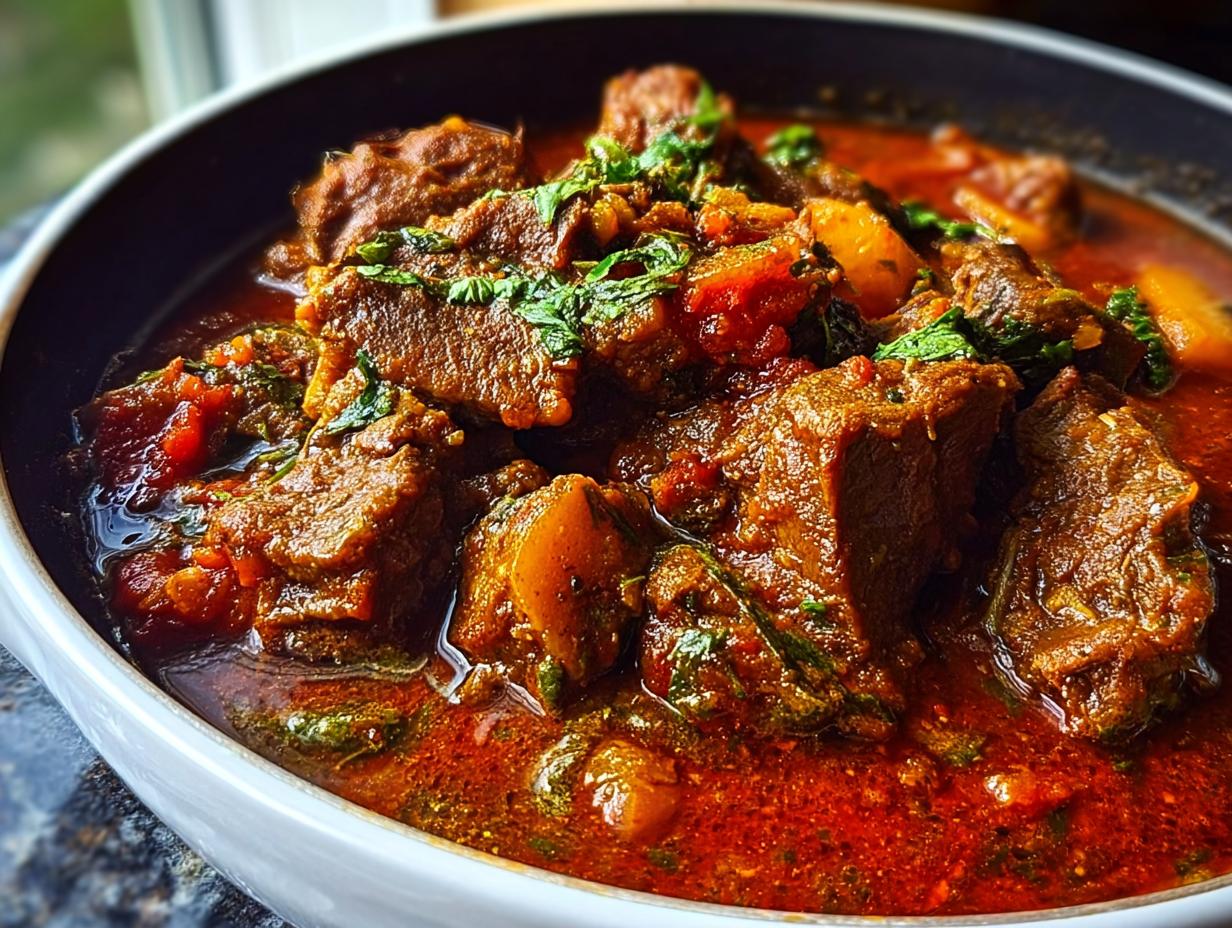
This Nigerian Beef Stew is rich, spicy, and bursting with bold flavors. It’s a comforting West African classic made with tender beef simmered in a vibrant tomato and pepper sauce, perfect for serving over rice or with plantains.
Ingredients
- 2 lbs beef (bone-in or boneless chunks)
- 2 seasoning cubes (Maggi or Knorr)
- Salt to taste
- 1 teaspoon garlic powder
- 1 teaspoon ginger powder
- ½ teaspoon black pepper
- 4 medium Roma tomatoes
- 2 red bell peppers
- 1–2 Scotch bonnet peppers (adjust to taste)
- 1 large red onion
- 3 cloves garlic
- 1-inch piece of fresh ginger
- ½ cup vegetable oil or palm oil
- 1 small onion (sliced)
- 2 tablespoons tomato paste
- 1 teaspoon thyme
- 1 teaspoon curry powder
- 1 bay leaf (optional)
Instructions
- Rinse and cut beef into chunks. Season with salt, seasoning cubes, garlic powder, ginger powder, and black pepper. Mix thoroughly and let it marinate for at least 30 minutes. Add a little water and boil on medium heat until the beef is tender and the stock is rich. Set beef and stock aside.
- In a blender, combine the tomatoes, red bell peppers, Scotch bonnet(s), large red onion, garlic, and ginger. Blend until smooth and set aside. Optional: pour the mixture into a saucepan and simmer for 10–15 minutes to reduce moisture and acidity.
- In a large heavy-bottomed pot, heat vegetable oil over medium heat. Fry the cooked beef in batches until browned on all sides. Remove and set aside.
- In the same oil (add more if needed), sauté sliced onions until fragrant. Stir in tomato paste and fry for 3–5 minutes. Pour in the blended pepper mix and fry on medium-low heat for 15–20 minutes, stirring frequently until the oil begins to separate from the sauce and the raw tomato smell disappears.
- Return the browned beef to the pot, along with some or all of the reserved beef stock. Add thyme, curry powder, bay leaf (if using), and adjust seasoning with more salt and seasoning cubes if needed. Stir well, cover, and let simmer on low heat for 20–30 minutes to allow flavors to marry and the beef to soak up the sauce.
- Stir occasionally, taste, and adjust seasoning. Skim off excess oil if necessary. Garnish with fresh chopped parsley or green onions if desired.
Notes
- This Nigerian beef stew tastes even better the next day.
- Using bone-in beef cuts like shank or brisket will add richness to the stew.
- Adjust stew consistency by adding stock or water if too thick, or simmer uncovered if too thin.
- Prep Time: 20 minutes
- Cook Time: 60 minutes
- Category: Main Dish
- Method: Stewing
- Cuisine: Nigerian
Nutrition
- Serving Size: 1 cup
- Calories: 380 kcal
- Sugar: 4g
- Sodium: 800mg
- Fat: 26g
- Saturated Fat: 6g
- Unsaturated Fat: 17g
- Trans Fat: 0g
- Carbohydrates: 9g
- Fiber: 2g
- Protein: 30g
- Cholesterol: 90mg
Keywords: Nigerian beef stew, authentic Nigerian beef stew, spicy Nigerian beef stew, flavorful Nigerian beef stew, rich Nigerian beef stew recipe, how to make Nigerian beef stew, best Nigerian beef stew, easy Nigerian beef stew, Nigerian beef stew with vegetables, Nigerian beef stew without tomatoes, traditional Nigerian beef stew, Nigerian stewed beef recipe, Nigerian beef stew for rice, Nigerian cow tail stew recipe, Nigerian goat meat stew recipe, Nigerian stewed meat recipe, Nigerian beef pepper soup recipe, Nigerian stewed beef with spices, Nigerian beef stew ingredients, what is Nigerian beef stew