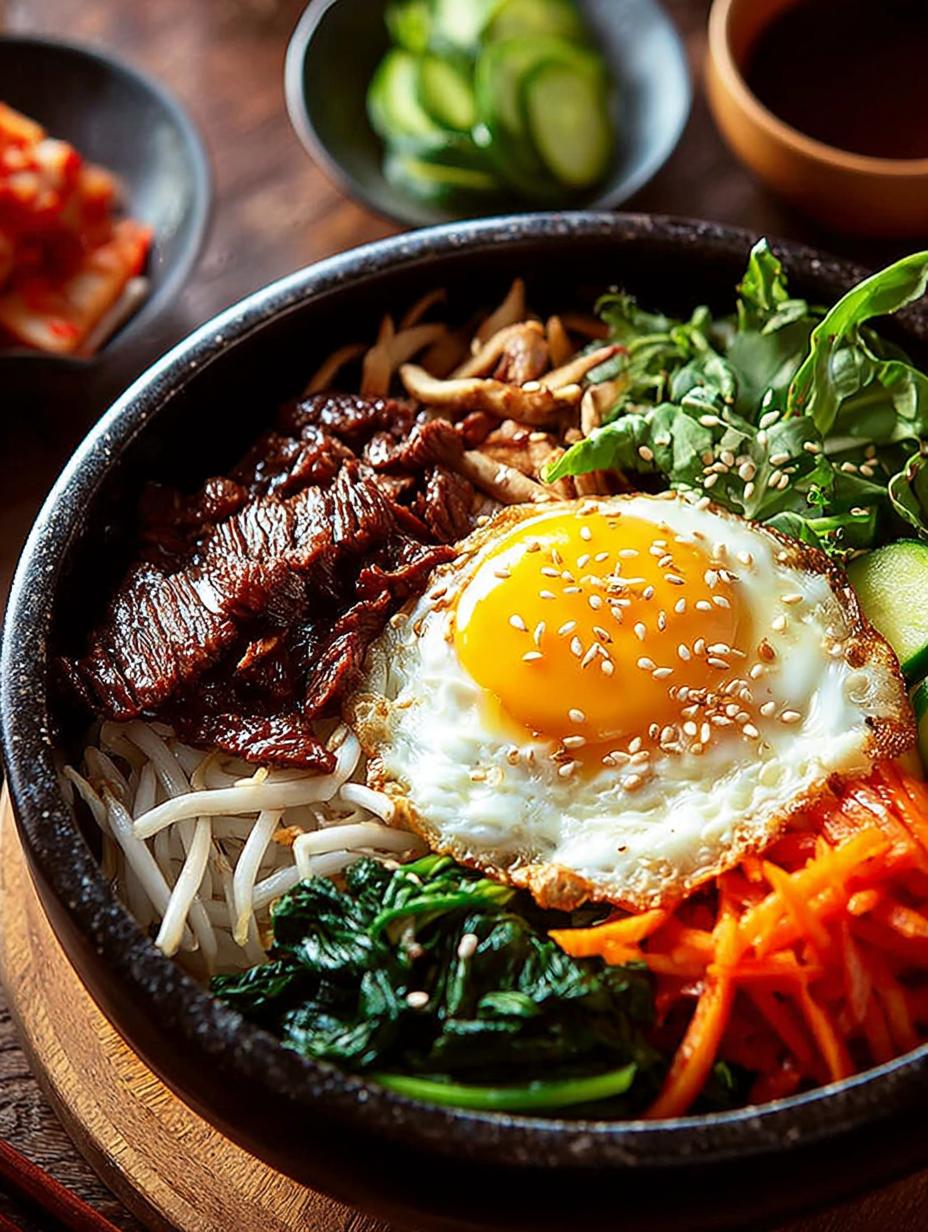
Korean Bibimbap is a delightful and colorful dish that has become one of the staples of Korean cuisine. This traditional meal features a vibrant mix of sautéed vegetables, marinated beef, and perfectly cooked rice, topped with a runny fried egg. It’s not only visually appealing but also packed with nutrition, making it a perfect meal for any time of the day. The combination of flavors and textures is simply irresistible, and today, I’ll show you how to make this authentic Korean rice bowl in your own kitchen.
Why You’ll Love This Korean Bibimbap
There are so many reasons to love Korean Bibimbap. First, it’s a complete meal in one bowl, making it a convenient option for busy weeknights. The mix of fresh vegetables and protein ensures a nutritious intake, and with healthy bibimbap options available, it can suit various dietary preferences. Whether you’re looking for a vegan bibimbap recipe or a traditional Korean bibimbap, this dish offers versatility. Plus, it’s visually stunning, making it a feast for the eyes as well as the palate. Not to mention, it’s a fantastic way to explore Korean cuisine, bringing an authentic taste of Korea right to your table.

Ingredients for Korean Bibimbap
Gather these items:
- 1 cup short-grain white rice
- 200 g thinly sliced beef (ribeye or sirloin)
- 1 medium carrot, julienned
- 1 cup spinach
- 1 cup bean sprouts
- 1 small zucchini, julienned
- 2 tablespoons gochujang
- 2 tablespoons soy sauce
- 1 tablespoon sesame oil
- 1 teaspoon sugar
- 2 cloves garlic, minced
- 2 eggs
- 1 teaspoon sesame seeds
- 2 scallions, chopped
How to Make Korean Bibimbap Step-by-Step
- Step 1: Rinse and cook the rice until tender and slightly sticky. Keep warm.
- Step 2: Marinate the beef in soy sauce, sesame oil, garlic, and sugar for 20 minutes.
- Step 3: Sauté the beef until browned and cooked through. Set aside.
- Step 4: Blanch the spinach and bean sprouts separately. Season each with a bit of sesame oil, garlic, and salt.
- Step 5: Lightly sauté the julienned carrots and zucchini with a touch of oil until just tender.
- Step 6: Fry eggs sunny-side-up until whites are set but yolks remain runny.
- Step 7: Mix gochujang with a bit of sesame oil, sugar, water, and vinegar to create the sauce.
- Step 8: Scoop rice into a bowl. Neatly arrange vegetables, beef, and egg on top.
- Step 9: Drizzle with gochujang sauce, sprinkle with sesame seeds and scallions, and serve.
- Step 10: Mix thoroughly before eating to enjoy the full Bibimbap experience.
Pro Tips for the Perfect Korean Bibimbap
Keep these in mind:
- This recipe is ideal for healthy food ideas or unique breakfast ideas.
- Adjust the spice level of the gochujang sauce according to your preference.
- For a vegan bibimbap recipe, substitute beef with marinated tofu or mushrooms.
Best Ways to Serve Korean Bibimbap
For an authentic bibimbap experience, serve it hot with a side of kimchi. You can also offer crispy seaweed snacks or pickled vegetables for added flavor and texture. If you enjoy spicy bibimbap toppings, consider adding extra gochujang or even a sprinkle of chili flakes for some heat.
How to Store and Reheat Korean Bibimbap
To store, simply keep the components separately in airtight containers in the refrigerator for up to three days. Reheat the rice and beef in the microwave before adding the fresh vegetables and egg. This method will help maintain the textures and flavors.
Frequently Asked Questions About Korean Bibimbap
What’s the secret to perfect Korean Bibimbap?
The key to perfect Korean Bibimbap lies in the balance of flavors and textures. Use a variety of fresh vegetables, well-marinated beef, and a perfectly runny egg to enhance the dish’s richness. Don’t forget to mix it all thoroughly for the best experience!
Can I make Korean Bibimbap ahead of time?
Yes, you can prepare the components of Korean Bibimbap ahead of time. Cook the rice, sauté the vegetables, and marinate the beef, then store them separately in the refrigerator. When ready to serve, simply reheat and assemble.
How do I avoid common mistakes with Korean Bibimbap?
To avoid common mistakes, ensure your rice is sticky enough to hold the ingredients together. Don’t overcook the vegetables; they should remain crisp. Finally, always taste and adjust the seasoning of your gochujang sauce to suit your palate.
Variations of Korean Bibimbap You Can Try
Feel free to experiment with Korean Bibimbap. You can create a vegetarian version by using mushrooms or tofu instead of beef. For a healthier twist, consider brown rice or quinoa as a base. Another exciting variation is to top it with different sauces, such as a sesame dressing or spicy gochujang for a kick. Enjoy the journey of creating your own unique bibimbap bowl ideas!
Print
Korean Bibimbap: 10 Reasons to Love This Delicious Dish
- Total Time: 1 hour 5 minutes
- Yield: 2 servings 1x
- Diet: Gluten Free
Description
Easy Korean Bibimbap is a quick dinner idea that’s as nutritious as it is colorful. A vibrant mix of sautéed vegetables, marinated beef, perfectly cooked rice, and a runny fried egg comes together in this traditional Korean rice bowl.
Ingredients
- 1 cup short-grain white rice
- 200 g thinly sliced beef (ribeye or sirloin)
- 1 medium carrot, julienned
- 1 cup spinach
- 1 cup bean sprouts
- 1 small zucchini, julienned
- 2 tablespoons gochujang
- 2 tablespoons soy sauce
- 1 tablespoon sesame oil
- 1 teaspoon sugar
- 2 cloves garlic, minced
- 2 eggs
- 1 teaspoon sesame seeds
- 2 scallions, chopped
Instructions
- Rinse and cook the rice until tender and slightly sticky. Keep warm.
- Marinate the beef in soy sauce, sesame oil, garlic, and sugar for 20 minutes.
- Sauté the beef until browned and cooked through. Set aside.
- Blanch the spinach and bean sprouts separately. Season each with a bit of sesame oil, garlic, and salt.
- Lightly sauté the julienned carrots and zucchini with a touch of oil until just tender.
- Fry eggs sunny-side-up until whites are set but yolks remain runny.
- Mix gochujang with a bit of sesame oil, sugar, water, and vinegar to create the sauce.
- Scoop rice into a bowl. Neatly arrange vegetables, beef, and egg on top.
- Drizzle with gochujang sauce, sprinkle with sesame seeds and scallions, and serve.
- Mix thoroughly before eating to enjoy the full Bibimbap experience.
Notes
- This recipe is ideal for healthy food ideas or unique breakfast ideas.
- Adjust the spice level of the gochujang sauce according to your preference.
- Prep Time: 20 minutes
- Cook Time: 45 minutes
- Category: Main Dish
- Method: Sautéing
- Cuisine: Korean
Nutrition
- Serving Size: 1 bowl
- Calories: 600
- Sugar: 4g
- Sodium: 800mg
- Fat: 20g
- Saturated Fat: 5g
- Unsaturated Fat: 10g
- Trans Fat: 0g
- Carbohydrates: 72g
- Fiber: 4g
- Protein: 26g
- Cholesterol: 200mg
Keywords: Korean Bibimbap, rice bowl, healthy dinner