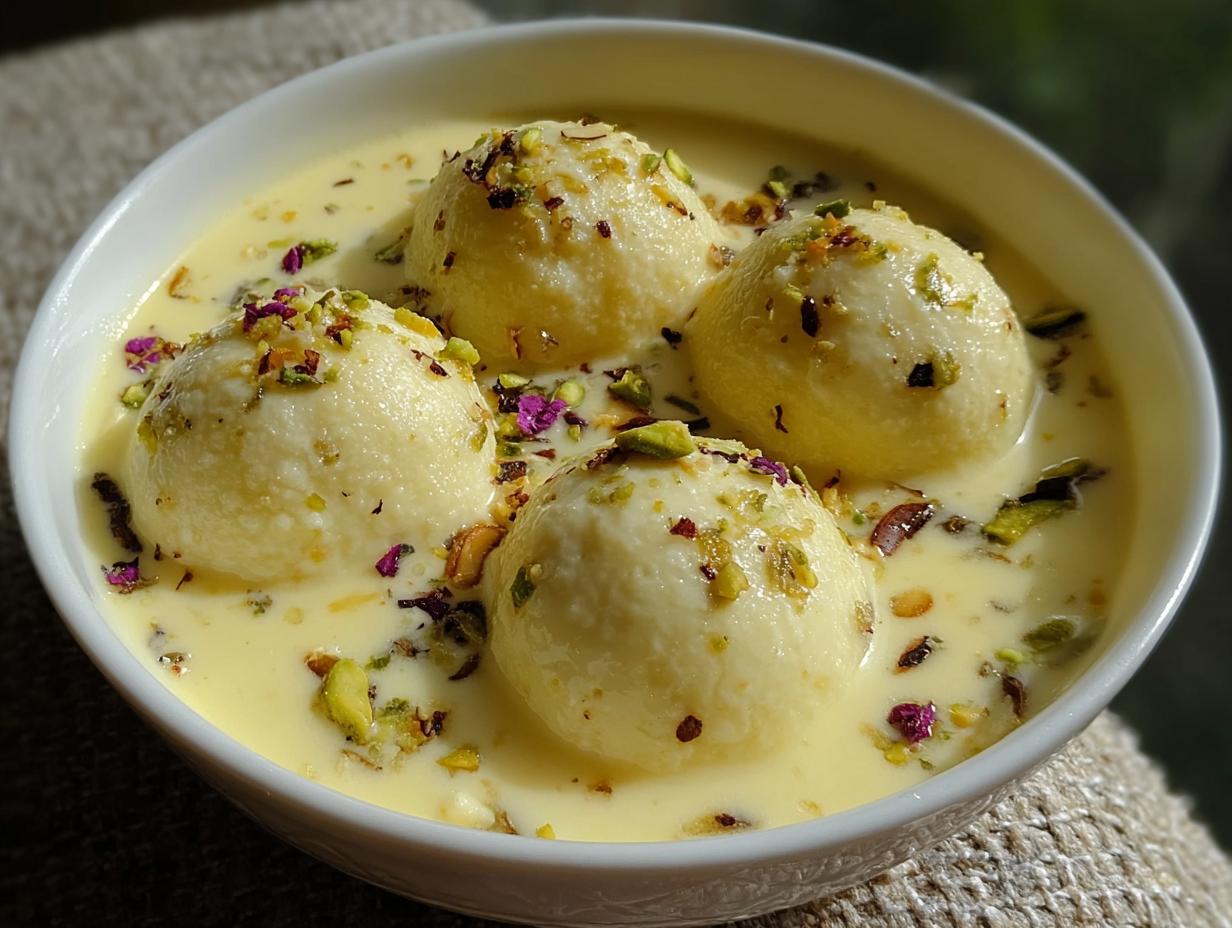
Rasmalai has always been my ultimate comfort dessert, evoking pure joy with every melt-in-your-mouth bite. I remember my aunt making it for every special occasion, filling our home with the sweet scent of cardamom and saffron. Learning how to make rasmalai at home felt like unlocking a delicious secret, and I’m so excited to share this easy rasmalai recipe for beginners with you. It’s a truly special Indian sweet that brings smiles to everyone’s faces. Let’s get cooking!
Why You’ll Love This Rasmalai Recipe
This delightful Indian Rasmalai is a dessert you’ll keep coming back to for so many reasons! It’s incredibly delicious, with a creamy, cardamom-infused flavor that’s simply divine. You’ll be surprised how manageable the prep time is, making it perfect even for busy weeknights or last-minute guests.
- Incredible melt-in-your-mouth taste
- Manageable prep time for a homemade treat
- A lighter option for a sweet craving
- Budget-friendly ingredients
- Family-friendly dessert everyone adores
- Authentic Indian Rasmalai experience
- Impressive yet easy to make
Ingredients for Authentic Rasmalai
Gathering the right ingredients is the first step to making this classic Indian sweet. This comprehensive rasmalai ingredients list ensures you have everything needed for perfectly soft discs and a rich, flavorful rabdi. Using full-fat milk is key for both components, as it helps in creating a richer rabdi and ensures the chenna (cheese curds) are soft and pliable.
- 5 cups full-fat milk – for making the chenna
- 1 cup lemon juice or white vinegar – to curdle the milk
- 1 cup ice water – helps create softer chenna
- 3 cups full-fat milk – for the creamy rabdi
- 1 cup sugar – adjust to your sweetness preference
- 1 teaspoon cardamom powder – for that signature fragrant flavor
- Saffron strands (optional) – for color and aroma
- 1 cup chopped nuts (pistachios and almonds) – for garnish
How to Make Rasmalai at Home
Now for the fun part – bringing this incredible dessert to life! Follow these steps to create a truly authentic Rasmalai experience. This recipe is designed to help you achieve that perfect, melt-in-your-mouth texture, making it a wonderful traditional rasmalai sweet recipe you can be proud of.
- Step 1: Prepare the Rabdi. Start by boiling 3 cups of full-fat milk in a heavy-bottomed pot over medium heat. Stir it often to prevent scorching and let it reduce by about half. This process creates a wonderfully rich base. Once thickened, mix in 1 cup of sugar, a pinch of saffron strands for a beautiful color and aroma (if using), and 1 teaspoon of cardamom powder for that signature fragrance. Keep this warm, but don’t let it boil further.
- Step 2: Make the Chenna. In a separate pot, bring 5 cups of full-fat milk to a boil. Once boiling, turn off the heat. Slowly and gradually add your lemon juice or vinegar, stirring gently until the milk curdles completely, separating into solids and whey. Immediately pour in 1 cup of ice water. This crucial step stops the cooking process, ensuring your chenna remains soft and doesn’t become tough.
- Step 3: Drain the Whey. Line a colander with a muslin or cheesecloth and carefully strain the curdled milk to separate the chenna from the whey. Rinse the chenna under cold running water to wash away any residual sourness from the lemon juice or vinegar. Gather the edges of the cloth and hang it for about 45-60 minutes to allow excess water to drain away completely.
- Step 4: Knead the Chenna. Once the chenna is well-drained, transfer it to a clean surface. Knead it gently with your hands for about 5-7 minutes until it becomes smooth, soft, and pliable. Be careful not to over-knead, as this can make the discs tough. Divide the dough into 12 equal portions. Roll each portion into a smooth ball, then gently flatten it into a small disc, about 1.5 inches in diameter.
- Step 5: Cook the Chenna Discs. In a wide, deep pan, combine 3.5 cups of water with 1 cup of sugar. Bring this to a rolling boil over medium-high heat, ensuring the sugar is fully dissolved. Carefully slide the prepared chenna discs into the boiling syrup, being careful not to overcrowd the pan. Cover the pan tightly and cook for 9-10 minutes. You’ll see them puff up beautifully! Let them cool in the syrup for at least 20 minutes to absorb the sweetness.
- Step 6: Assemble the Rasmalai. Gently lift the cooled chenna discs from the sugar syrup. Lightly press each disc between your palms to squeeze out the excess syrup – be gentle! Place these slightly squeezed discs into the bowl containing the warm, prepared rabdi. Ensure they are submerged in the creamy milk mixture. This is where the magic of a traditional rasmalai sweet recipe truly comes together.
- Step 7: Chill and Serve. Cover the bowl and refrigerate for at least 4-6 hours, or preferably overnight. This chilling time is essential for the flavors to meld beautifully and for the discs to soak up the delicious rabdi. Just before serving, garnish generously with your chopped pistachios and almonds for a delightful crunch and visual appeal.

Preparing the Creamy Rabdi
To make the creamy rabdi, boil 3 cups of full-fat milk in a heavy-bottomed pot, stirring frequently until it reduces by half. Stir in sugar, cardamom powder, and saffron strands (if using) for a truly aromatic and flavorful base. This step is key for a delicious saffron rasmalai recipe.
Making the Soft Spongy Rasmalai Discs
After curdling 5 cups of milk with lemon juice or vinegar, drain it through muslin cloth. Rinse well and hang to drain for an hour. Then, knead the chenna until smooth. Roll into balls and flatten slightly. This careful process is vital for how to get soft rasmalai discs.
Cooking and Assembling the Rasmalai
Boil the chenna discs in a sugar syrup for 9-10 minutes until they puff up. Let them cool in the syrup. Gently squeeze out excess syrup and then submerge them in the prepared rabdi. This process ensures they absorb the rich flavors from the rasmalai syrup recipe and the rabdi.
Pro Tips for the Best Rasmalai
Achieving that perfect, melt-in-your-mouth Rasmalai is easier than you think with these insider tips. I’ve learned a few tricks over the years that make all the difference in getting that authentic taste and texture right every time.
- Always use full-fat milk; it’s crucial for both the chenna and the rabdi to achieve the right richness and consistency.
- Don’t over-knead the chenna. Knead just until it’s smooth and pliable, otherwise, your Rasmalai discs can become tough and dense.
- After cooking the discs in syrup, let them cool completely within the syrup. This allows them to absorb the sweetness and become soft.
What’s the secret to perfect Rasmalai?
The secret to that signature soft spongy rasmalai texture lies in the chenna. After curdling the milk, it’s vital to drain the whey thoroughly but not over-dry it. Gentle kneading and then cooking the discs in a sugar syrup are key steps to achieving that delicate, airy feel. For more dessert inspiration, check out these latest recipes.
Can I make Rasmalai ahead of time?
Yes, absolutely! You can prepare the chenna discs and the rabdi a day in advance. Store them separately in airtight containers in the refrigerator. Assemble the Rasmalai a few hours before serving to allow the flavors to meld, but it’s best to do the final assembly on the day you plan to serve it for optimal freshness.
How do I avoid common mistakes with Rasmalai?
A common pitfall is using low-fat milk, which leads to dry chenna. Also, over-kneading the chenna is a frequent mistake that can make your Rasmalai tough. To avoid the dreaded question, ‘why is my rasmalai not spongy?’, ensure you don’t squeeze too much moisture out of the chenna after draining, and cook the discs in boiling syrup. Understanding the science behind cooking can help prevent these issues; for example, learning how long to boil chicken breast involves similar principles of heat transfer and moisture retention.
Best Ways to Serve Rasmalai
Serving Rasmalai is all about enhancing its delicate flavors and presenting it beautifully. I love serving it chilled, straight from the refrigerator, as the cool, creamy sweetness is incredibly refreshing. For a truly festive touch, especially during celebrations like Diwali or Eid, I often arrange the Rasmalai on a platter and garnish it generously with slivered pistachios and almonds.
- Serve chilled for a refreshing dessert experience.
- Garnish with chopped nuts like pistachios and almonds for texture and visual appeal.
- Pair it with a cup of hot chai or coffee for a delightful contrast.
- Consider it the perfect sweet ending for any Indian feast or gathering.
This dessert is always a hit, making it ideal for rasmalai for festivals and special occasions.
Nutrition Facts for Rasmalai
Here’s a look at the nutritional breakdown for a single serving of this delightful Indian dessert:
- Calories: 120 kcal
- Fat: 5 g
- Saturated Fat: 3 g
- Protein: 4 g
- Carbohydrates: 18 g
- Fiber: 0 g
- Sugar: 12 g
- Sodium: 30 mg
Nutritional values are estimates and may vary based on specific ingredients used in your preparation.
How to Store and Reheat Rasmalai
Proper storage is key to enjoying your delicious homemade Rasmalai. Once the dessert has cooled completely, gently place the Rasmalai discs into an airtight container, making sure they are submerged in the creamy rabdi. This prevents them from drying out. You can store it in the refrigerator for up to 3-4 days. For longer storage, you can freeze the Rasmalai. Place the discs in a freezer-safe container, ensuring they are covered in rabdi, and freeze for up to 3 months. If you used condensed milk in your rabdi, it can help maintain a good texture even after freezing. If you’re interested in other dairy-based desserts, you might enjoy this pineapple ice cream recipe.
To reheat frozen Rasmalai, thaw it in the refrigerator overnight. You can then gently warm it on the stovetop over low heat or microwave it for a few seconds until just warm. Avoid overheating, as this can alter the delicate texture of the chenna discs.
Frequently Asked Questions About Rasmalai
What is Rasmalai made of?
Rasmalai is a delightful Indian dessert primarily made from chenna (freshly made cottage cheese or curdled milk solids) discs that are soaked in a rich, creamy milk syrup called rabdi. The rabdi is typically flavored with cardamom, saffron, and often sweetened with sugar. The chenna discs are cooked in a sugar syrup first to make them soft and spongy before being transferred to the rabdi.
What is the difference between Rasgulla and Rasmalai?
While both Rasgulla and Rasmalai are made from chenna discs, the key difference lies in how they are served. Rasgulla are soft chenna balls soaked in a light sugar syrup. Rasmalai, on the other hand, takes these chenna discs (or sometimes slightly flattened discs) and submerges them in a thicker, creamy, sweetened milk mixture (rabdi) flavored with cardamom and saffron. Rasmalai is essentially a milk-based dessert variation of Rasgulla.
Can I use condensed milk for the rabdi?
Yes, you absolutely can use condensed milk to make the rabdi for your Rasmalai! It’s a fantastic shortcut that adds sweetness and creaminess quickly. If you use condensed milk, you’ll likely need less added sugar, so it’s best to taste and adjust. This can make the process even easier for an easy rasmalai recipe.
How do I ensure my Rasmalai is soft and spongy?
To achieve that signature soft, spongy texture, the chenna needs to be handled correctly. After curdling the milk, drain it thoroughly but don’t squeeze out all the moisture. Knead the chenna just until it’s smooth and holds together – over-kneading can make it tough. Cooking the discs in boiling sugar syrup for about 9-10 minutes until they puff up is also crucial. This cooking process is key to getting soft Rasmalai.
Variations of Rasmalai You Can Try
While this classic recipe is divine, there are so many delightful ways to switch up your Rasmalai! Exploring these variations can introduce new flavors and cater to different dietary needs. For instance, the traditional Bengali Rasmalai is often made with a slightly different chenna preparation, but the core essence remains the same. You can also experiment with flavors; a subtle hint of rosewater or a touch more saffron can create a beautiful twist.
- Dietary Variation: For a vegan version, you can use plant-based milk (like almond or soy) and a vegan condensed milk or cashew paste for the rabdi.
- Flavor Infusion: Enhance your cardamom flavored rasmalai by adding a few drops of rose water to the rabdi, or steep a few strands of saffron for a richer aroma and color.
- Quick Method: If you’re short on time, you can use store-bought rasgullas and simply soak them in homemade or store-bought rabdi.
- Fruity Twist: Gently fold in some pureed mango or berries into the rabdi for a delightful fruit-infused Rasmalai.
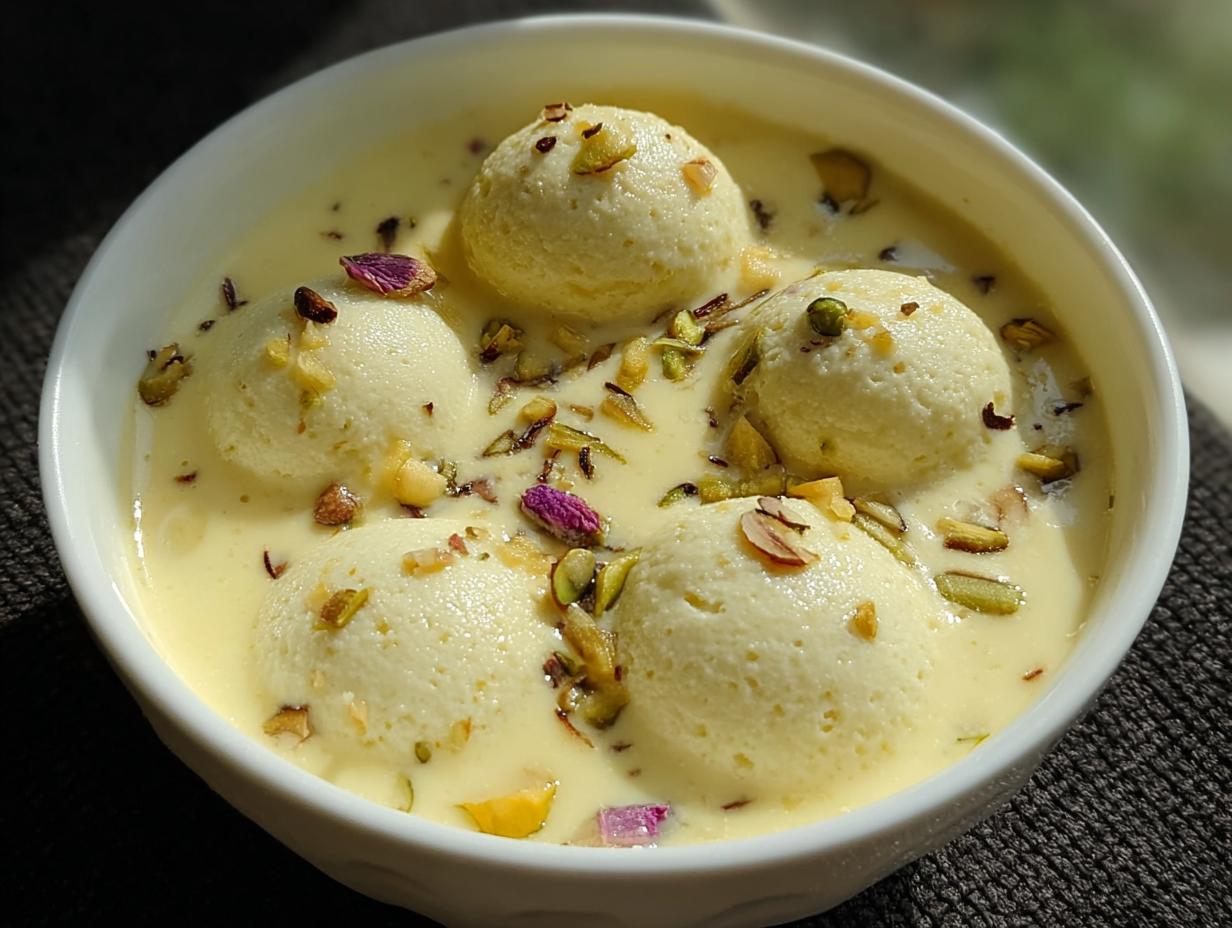

Rasmalai: 1 Easy Recipe for Joyful Bites
- Total Time: 4 hours
- Yield: 12 pieces 1x
- Diet: Vegetarian
Description
Learn how to make delicious Rasmalai at home with this easy recipe. This melt-in-your-mouth Indian dessert features soft, spongy chenna discs soaked in fragrant, creamy rabdi. Perfect for celebrations or a sweet treat.
Ingredients
- For the Chenna:
- 5 cups Milk (full-fat recommended)
- 1 cup Lemon Juice or Vinegar
- 1 cup Ice Water
- For the Rabdi:
- 3 cups Milk (full-fat recommended)
- 1 cup Sugar (adjust to taste)
- 1 teaspoon Cardamom Powder
- Saffron strands (optional)
- For the Finishing Touch:
- 1 cup Chopped Nuts (Pistachios/Almonds)
- 12 pieces Rasgulla (optional, for instant method)
Instructions
- Prepare the Rabdi: Boil 3 cups of milk in a heavy-bottomed pot over medium heat. Stir continuously until it reduces by half. Mix in sugar, saffron (if using), and cardamom powder.
- Make the Chenna: Boil 5 cups of milk, then turn off the heat. Gradually add lemon juice or vinegar while stirring until the milk curdles completely. Pour in ice water to stop the cooking process and ensure the chenna stays soft.
- Drain the Whey: Strain the curdled milk using a muslin cloth to remove excess whey. Rinse the chenna under cold water to eliminate any sourness. Hang the cloth for 45-60 minutes to drain thoroughly.
- Knead the Chenna: Once drained, knead the chenna until it becomes smooth and pliable. Divide it into 12 equal portions. Roll each portion into a ball and flatten it slightly into a disc.
- Cook the Chenna Discs: Boil 3.5 cups of water with 1 cup of sugar until the sugar dissolves. Gently add the chenna discs to the boiling syrup. Cover and cook for 9-10 minutes, allowing them to puff up. Let them cool in the syrup for 20 minutes.
- Assemble the Rasmalai: Gently squeeze out the excess syrup from the cooled chenna discs. Place the discs in a bowl filled with the prepared warm rabdi.
- Chill and Serve: Refrigerate the Rasmalai for several hours to allow the flavors to meld. Garnish with chopped nuts just before serving.
Notes
- For the best texture, use full-fat milk for both the chenna and rabdi.
- Do not over-knead the chenna, as this can result in dense discs.
- Allow sufficient chilling time for the flavors to develop fully.
- Store leftover Rasmalai in an airtight container in the refrigerator for up to 2-3 days, ensuring the discs remain submerged in rabdi.
- Prep Time: 30 minutes
- Cook Time: 30 minutes
- Category: Desserts
- Method: Homemade
- Cuisine: Indian
Nutrition
- Serving Size: 1 piece
- Calories: 120 kcal
- Sugar: 12 g
- Sodium: 30 mg
- Fat: 5 g
- Saturated Fat: 3 g
- Unsaturated Fat: 2 g
- Trans Fat: 0 g
- Carbohydrates: 18 g
- Fiber: 0 g
- Protein: 4 g
- Cholesterol: 10 mg
Keywords: Rasmalai, Ras Malai, Rasmalai recipe, Rasmalai sweets, Indian Rasmalai, Bengali Rasmalai, how to make rasmalai at home, easy rasmalai recipe for beginners, traditional rasmalai sweet recipe, best rasmalai recipe without khoya, authentic rasmalai milk pudding, quick rasmalai dessert recipe, homemade rasmalai with condensed milk, what is rasmalai made of, how to get soft rasmalai, rasmalai ingredients list, rasmalai syrup recipe, cardamom flavored rasmalai, saffron rasmalai recipe, soft spongy rasmalai texture