Rasgulla has always been my ultimate comfort food, a taste of pure nostalgia from my childhood trips to India. I can still vividly remember the first time I tried a perfectly soft, spongy rasgulla, melting in my mouth with its sweet, delicate syrup. Making this classic Bengali sweet at home seemed intimidating at first, but I discovered an easy rasgulla recipe that truly captures that authentic flavor and texture. This homemade rasgulla is surprisingly simple to master, and the aroma of cardamom-infused syrup filling my kitchen always brings a smile to my face. Let’s get cooking!
Why You’ll Love This Rasgulla
This recipe is a winner for so many reasons! Get ready to fall in love with this classic Indian dessert.
- Incredibly soft and spongy texture that melts in your mouth.
- A wonderfully sweet and delicate flavor profile perfect for any occasion.
- Surprisingly quick prep time, making this an easy rasgulla recipe for busy weeknights.
- Budget-friendly ingredients mean you can enjoy this delightful treat without breaking the bank.
- It’s a crowd-pleaser that kids and adults alike will adore.
- Achieve authentic, syrupy perfection every time with this easy rasgulla recipe.
- Enjoy a taste of traditional Bengali sweets right in your own kitchen.
Ingredients for Rasgulla
Gathering the right ingredients is the first step in mastering this rasgulla recipe with chenna. You only need a few simple items to create these delightful Indian sweets.
- 1 liter Full Cream Milk – This is crucial for creating the proper chenna (curds and whey). Whole milk yields the best texture.
- 2 tablespoons Lemon Juice – This acts as the coagulant to separate the milk into solids and whey.
- 1 cup Sugar – For the sweet, syrupy base that the rasgullas will soak in.
- 4 cups Water – Used to create the sugar syrup.
- 4 pieces Green Cardamom Pods (optional) – Adds a wonderful aromatic fragrance to the syrup.
How to Make Rasgulla
Follow these simple rasgulla making steps to create these beloved Bengali sweets. It’s easier than you think to achieve that signature soft and spongy texture that everyone loves!
- Step 1: Begin by heating 1 liter of full cream milk in a large, heavy-bottomed pot over medium heat. Stir occasionally to prevent the milk from sticking or scorching. Bring it to a rolling boil.
- Step 2: Once the milk is boiling, reduce the heat slightly and gradually add 2 tablespoons of lemon juice while gently stirring. Continue adding the lemon juice until the milk curdles completely and separates into solid chenna and liquid whey.
- Step 3: Immediately strain the curdled milk through a fine-mesh sieve lined with a muslin cloth or cheesecloth. Rinse the chenna under cold running water for a moment to remove any lingering lemon taste.
- Step 4: Gather the muslin cloth and gently squeeze out as much excess water as possible from the chenna. Transfer the drained chenna onto a clean, dry surface or plate. Knead the chenna with the heel of your hand for about 5-7 minutes. You want it to become smooth, soft, and slightly greasy without any lumps.
- Step 5: Divide the kneaded chenna into 8 equal portions. Roll each portion between your palms to form smooth, crack-free balls. Ensure they are firm but not dense.
- Step 6: In a separate large pot or pressure cooker, combine 1 cup of sugar and 4 cups of water. Bring this mixture to a vigorous boil. If you’re using them, add the green cardamom pods at this stage.
- Step 7: Carefully drop the prepared chenna balls into the boiling sugar syrup, making sure not to overcrowd the pot.
- Step 8: Cover the pot tightly with a lid and let the rasgullas simmer on medium-high heat for exactly 12-15 minutes. You’ll notice the balls puff up and double in size. Avoid the temptation to open the lid during this crucial cooking time. These rasgulla making steps are key to their perfect texture.

- Step 9: After simmering, turn off the heat and let the rasgullas sit in the hot syrup for at least 30 minutes to absorb more sweetness and soften further. These detailed rasgulla making steps ensure a delightful outcome.
- Step 10: Serve the rasgullas warm or chilled, ideally with some of the syrup. You’ll be amazed at how soft and delicious your homemade rasgullas are!
Pro Tips for the Best Rasgulla
Achieving that perfect, melt-in-your-mouth texture for your Bengali rasgulla is totally doable with a few insider tricks! These tips will help elevate your homemade sweet.
- Use only full-cream milk; low-fat milk won’t give you the right chenna, which is the base for this classic Indian dessert.
- Don’t over-knead the chenna! Too much kneading can make the rasgullas tough instead of delightfully soft.
- Resist the urge to open the lid while the rasgullas are simmering in the syrup. This is crucial for them to puff up properly.
- Ensure your sugar syrup is at a vigorous boil before adding the chenna balls. This helps them maintain their shape and cook evenly.
What’s the secret to perfect soft rasgulla balls?
The real secret lies in the chenna preparation. Knead it just until smooth and pliable, then roll the balls gently. The key is not to overwork it. This ensures your rasgulla will be wonderfully soft and spongy, soaking up that delicious syrupy goodness. For more insights into dairy preparation, you might find resources on proper milk handling useful.
Can I make rasgulla ahead of time?
Yes, you absolutely can! You can prepare the chenna balls a day in advance and store them covered in the refrigerator. Make the syrup just before you plan to cook them. This makes the actual cooking process much quicker.
How do I avoid common mistakes with homemade rasgulla?
A common pitfall is using skim milk, which results in hard rasgullas. Always use full-fat milk. Another mistake is overcrowding the syrup; cook them in batches if necessary to allow them to expand properly.
Best Ways to Serve Rasgulla
Once your delicious Rasgulla are ready, the best part is enjoying them! I love serving these sweet, spongy delights slightly warm or chilled, straight from the syrup. They are a perfect ending to any Indian meal, especially when paired with a rich, creamy dessert like Kheer or Gajar ka Halwa. For a truly authentic experience, try serving them as part of a traditional Bengali thali, alongside savory dishes. The contrast between the savory and the sweet makes for an unforgettable meal. These simple yet divine treats are a testament to the magic of Bengali rasgulla.
Nutrition Facts for Rasgulla
Enjoying this classic Indian dessert comes with a surprisingly light nutritional profile. Here’s a look at what you can expect per serving of these delightful Bengali sweets.
- Calories: 120 kcal
- Fat: 1 g
- Saturated Fat: 0.5 g
- Protein: 2 g
- Carbohydrates: 25 g
- Fiber: 0 g
- Sugar: 20 g
- Sodium: 10 mg
Nutritional values are estimates and may vary based on specific ingredients used and the exact size of your rasgulla.
How to Store and Reheat Rasgulla
Once your delicious rasgullas are perfectly cooked and have cooled slightly, proper storage is key to maintaining their wonderful texture. I always let them cool in their syrup for at least 30 minutes before transferring them to an airtight container. You can store them in the refrigerator for up to 3-4 days. For longer storage, freezing is an excellent option. Place the cooled rasgullas, submerged in their syrup, into an airtight, freezer-safe container. They should last beautifully for up to 3 months. If you’re wondering about making them with alternatives, remember that rasgullas made rasgulla without rennet might have slightly different storage needs, so always check specific recipe notes. For more dessert inspiration, check out these dessert recipes.
Reheating is simple! If your rasgullas have been refrigerated, you can gently warm them in their syrup over low heat for a few minutes until they reach your desired temperature. If they’ve been frozen, thaw them overnight in the refrigerator before gently warming them. Avoid microwaving, as this can sometimes make them rubbery. Enjoy your perfectly preserved Bengali sweets!
Frequently Asked Questions About Rasgulla
Can I make rasgulla using different types of milk?
While full-cream milk is highly recommended for the best chenna and texture, you can experiment with other types. Skim milk or low-fat milk tend to produce tougher rasgullas because they don’t yield enough fat for a soft, spongy result. If you do use lower-fat options, you might need to adjust the kneading time or accept a slightly different texture.
What causes rasgullas to become hard or chewy?
Hard or chewy rasgullas are usually a result of over-kneading the chenna or cooking them for too long in the syrup. It’s also important that the sugar syrup is at a rolling boil before you add the chenna balls; if it’s not hot enough, they won’t puff up properly. Remember, gentle handling of the chenna is key!
How do I get the syrup to the right consistency?
The syrup for rasgullas should be thin and watery, not thick like for gulab jamun. You just need to dissolve the sugar in plenty of water and bring it to a vigorous boil. The rasgullas absorb the syrup as they cook and expand, so a thinner syrup is essential for them to soak up properly and maintain their delicate texture. Don’t worry about precise syrup consistency; the cooking time is more critical. For other sweet syrup recipes, consider looking at lemonade recipes which often involve simple syrup.
Are there any ways to reduce the rasgulla calories?
While traditionally made with sugar and milk, you can explore ways to lower the rasgulla calories. Using a sugar substitute in the syrup is one option, though this can slightly alter the taste and texture. You can also focus on making smaller rasgullas or serving them with less syrup. However, the creamy milk is what gives them their characteristic richness, so some elements are hard to change without altering the essence of the dessert.
Variations of Rasgulla You Can Try
While the classic Bengali rasgulla is divine, exploring variations can add exciting new dimensions to this beloved Indian dessert. I love how you can tweak this recipe to suit different tastes and dietary needs. For instance, have you ever considered how rasmalai vs rasgulla differ? Rasmalai uses chenna in a thickened, flavored milk, whereas rasgulla are poached in a light sugar syrup. This distinction opens doors for creativity!
- Flavor Infusions: Elevate your rasgullas by adding flavorings to the sugar syrup. A few drops of rose water, a hint of saffron, or even a touch of kewra water can impart a beautiful aroma and taste.
- Chocolate Rasgulla: For a decadent twist, incorporate a tablespoon of unsweetened cocoa powder into the chenna mixture before shaping the balls. This creates a delightful chocolate-infused version that’s surprisingly good.
- Dietary Adaptations: While not traditional, you can experiment with sugar substitutes for a lower-sugar option. Remember, the texture might slightly change. Finding a good sugar substitute is key to maintaining that classic sweetness.
- Baked Rasgulla: For a different texture, try baking them! After poaching in syrup, you can bake them at a low temperature until lightly golden. This gives them a slightly firmer exterior, a fun contrast to the usual soft texture.
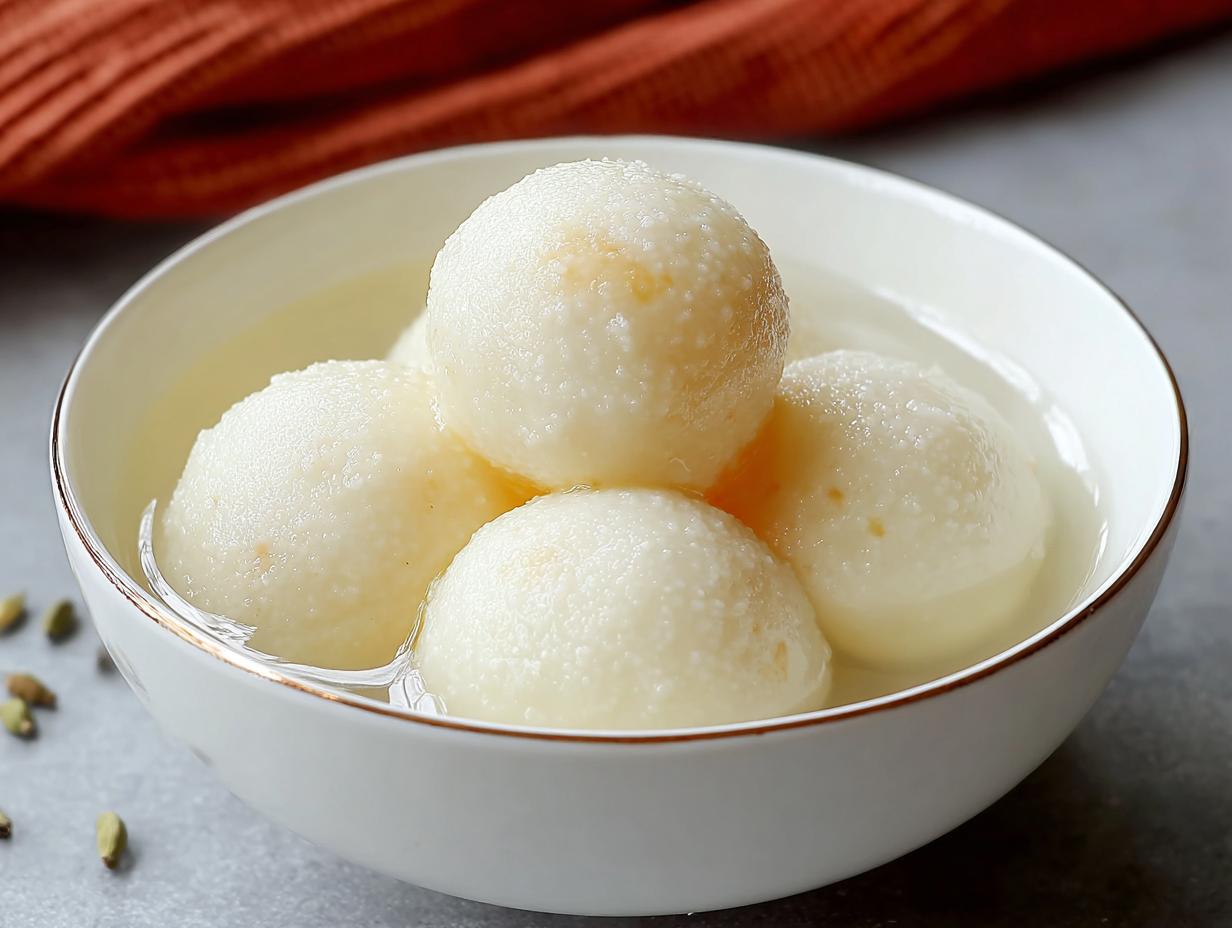
Rasgulla: Deliciously Soft 12-15 Min Recipe
- Total Time: 1 hour 20 minutes
- Yield: 8 pieces 1x
- Diet: Vegetarian
Description
Learn how to make authentic homemade Rasgulla, a classic Bengali sweet. This recipe uses simple ingredients for soft, spongy, syrup-soaked balls that are a delight for any occasion. Follow easy steps to recreate this beloved Indian dessert in your kitchen.
Ingredients
- 1 liter Full Cream Milk
- 2 tablespoons Lemon Juice
- 1 cup Sugar
- 4 cups Water
- 4 pieces Green Cardamom Pods (optional)
Instructions
- Pour full cream milk into a large pot and bring it to a boil over medium heat, stirring occasionally to prevent scorching.
- Once boiling, add lemon juice gradually while stirring gently until the milk curdles and separates into solids and whey.
- Carefully pour the curdled milk through a muslin cloth or fine sieve to strain the chenna, rinsing it under cold water.
- Transfer the strained chenna to a clean surface and knead for 5-7 minutes until it becomes smooth and slightly greasy.
- Divide the kneaded chenna into small portions, shaping them into smooth balls without any cracks.
- In a large pot, combine sugar and water, bringing to a rolling boil. If using, add green cardamom pods before adding the chenna balls.
- Gently place the chenna balls into the boiling syrup.
- Cover the pot and simmer for 12-15 minutes until the balls double in size.
- Once cooked, allow the Rasgullas to cool in the syrup for at least 30 minutes before serving chilled.
Notes
- Garnish with a sprinkle of cardamom or a few strands of saffron for added flair.
- Store Rasgullas in an airtight container in the refrigerator for up to 3 days.
- For freezing, place cooled Rasgullas submerged in syrup in an airtight container for up to 3 months. Thaw overnight in the refrigerator.
- If Rasgullas turn out hard, ensure gentle kneading and maintain a boiling syrup. Soaking in warm syrup can help soften them.
- Consider dairy alternatives for lactose-intolerant individuals, though texture may vary.
- Experiment with flavors like rose essence or saffron by adding them to the syrup while boiling.
- Prep Time: 20 minutes
- Cook Time: 30 minutes
- Category: Desserts
- Method: Boiling and Steaming
- Cuisine: Bengali
Nutrition
- Serving Size: 1 piece
- Calories: 120 kcal
- Sugar: 20 g
- Sodium: 10 mg
- Fat: 1 g
- Saturated Fat: 0.5 g
- Carbohydrates: 25 g
- Protein: 2 g
- Cholesterol: 5 mg
Keywords: Rasgulla recipe, how to make rasgulla, easy rasgulla recipe, homemade rasgulla, rasgulla making steps, authentic rasgulla recipe, rasgulla recipe with chenna, best rasgulla recipe, rasgulla syrup recipe, rasgulla ingredients and instructions, what is rasgulla, rasgulla Indian dessert, soft rasgulla balls, rasgulla sponge cake, sweet rasgulla, Bengali rasgulla, syrupy rasgulla, rasmalai vs rasgulla, rasgulla for diabetics, rasgulla without rennet, rasgulla calories, rasgulla vs gulab jamun